Posts Tagged Under: computer hardware

What Logical Increments Tier is Required to Run the Most Popular Steam Games?

Top Games Header

(Information on Steam’s top games were gathered for this article from Steam Charts)

Back in January 2020, I crafted a neat little piece discussing the Logical Increments tier needed to enjoy each of the top games on Steam at the time. Fast forward to now, and oh, how the scene has shifted! Back around that period, we were seeing trade tariffs causing a good bump in prices for PC hardware​. As we ventured into late 2020, high demand meant the cost of PC parts kept climbing, and 2021 brought even higher prices—especially for graphics cards due to a cryptocurrency boom. Oh, and let’s not forget, the world was just getting acquainted with Covid-19, adding a whole new level of complexity to tech market dynamics through supply chain issues.

Now, at the tail end of 2023, with prices and availability having normalized in some (though not all) component categories, and just a week left until Black Friday and Cyber Monday, it’s about time we take a fresh look at what Logical Increments PC building tier you’d need to dive into the most popular Steam games today. Let’s see what changed in the last few years, and whether that ol’ system still has some life in it, or whether it might be worth a little upgrade. Stick around as we unpack the current gaming demands and discuss today’s tech landscape.

Read More


How Many CPU Cores Do You Need?

CPU Core Count

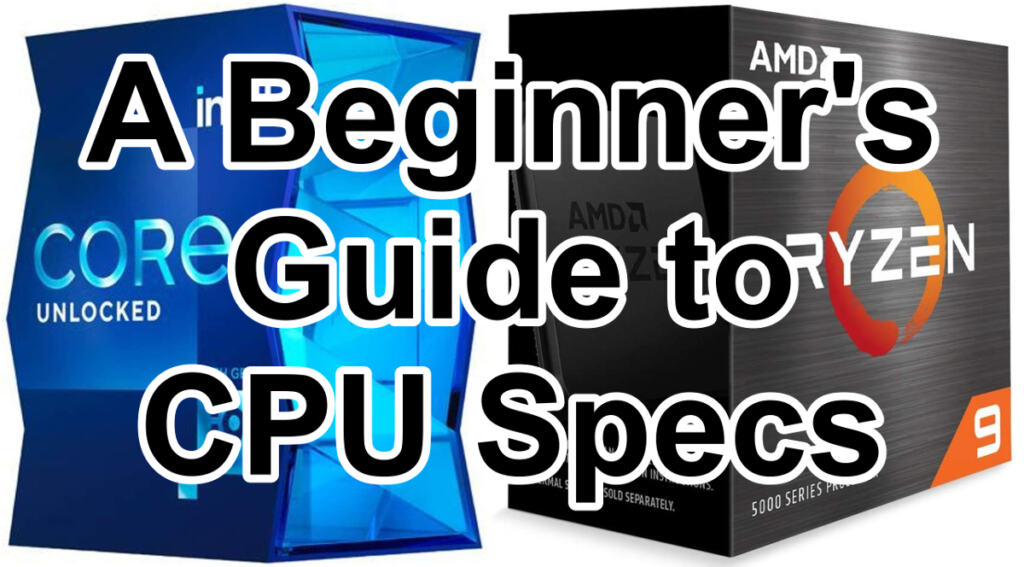
Whether you’re building a new computer or just upgrading your current one, the CPU (central processing unit)—being the ‘brain’ of the computer—is an important component to get right.

But, with all the improvements and advancements in recent years on both the hardware and software sides, how many CPU cores do you need?

Read More


What the Heck Are CPU Threads, Anyway?

CPU Threads

So-called “threads” have been a frequent source of confusion for those comparing or buying CPUs, even among people using our main build chart. What they are is never really explained, and most explanations that do exist only give a rough idea or mix it up with other things.

In the end, the basic explanation is surprisingly simple, so let’s clear this up once and for all.

Read More


RAM Channels Guide: The What, and The How

If you’ve ever taken a look at a product page for sticks of RAM, or at the specifications for a CPU or motherboard, you’ve probably seen “memory channels” mentioned.

For many beginners, this sparks questions like, “What’s the deal? Does dual-channel mean I can only use two sticks? What do multiple channels do that one channel doesn’t? Can I use quad-channel RAM on a dual-channel motherboard?”

The answers to those questions and more can be found below, so read on!

Read More


Motherboard VRMs: What are Power Phases, and How Many Should I Have?

Motherboard VRM Power Phases Explanation

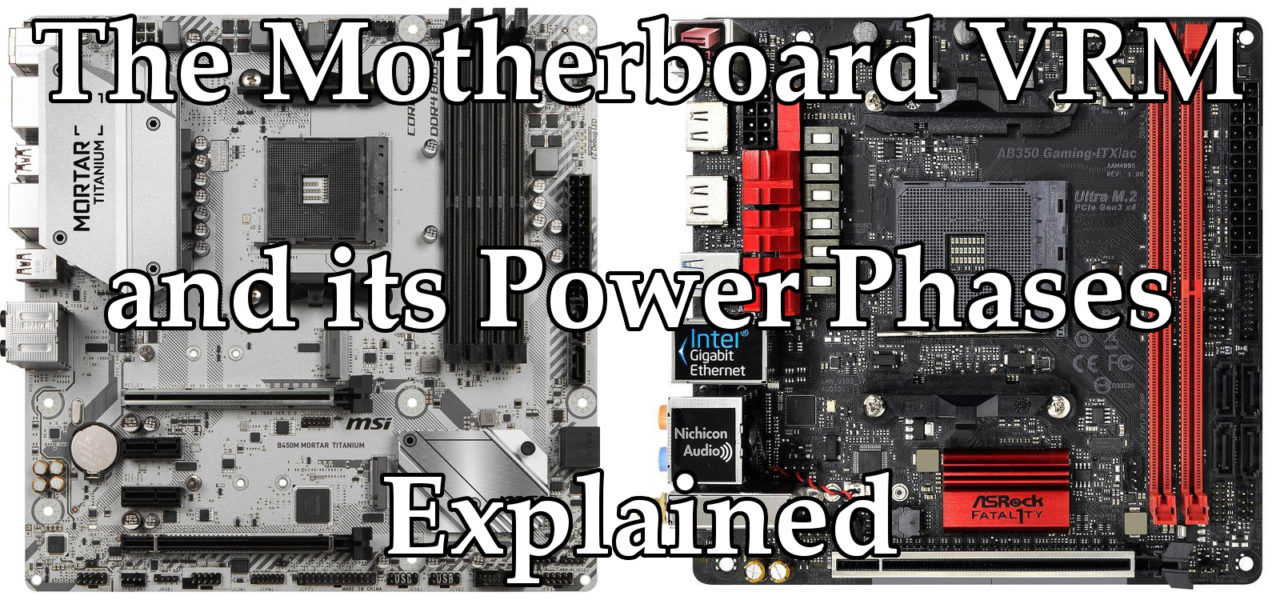
Often, motherboard product pages and online forum users mention a motherboard’s VRM and how many power phases it has. Being a somewhat technical topic, VRMs aren’t an easy topic to get into. So today, we will introduce the concept of the VRM and these so-called power phases as simple and straightforward as possible, so that you can easily discern what a motherboard product page is telling you (and when it matters).

Read More


Building a PC with AMD Ryzen 3

With the launch of Ryzen 3 1200 and 1300X, we finally have a full range of Ryzen CPUs to choose from. Before you get building, you need to know what these new Ryzen 3s can do, and that’s where I come in. So read on to view some awesome PC’s for a tiny cost!

Read More


What We Are Waiting For, Part 5: Beyond 1080p

It seems that we are entering a new phase for PC screen resolution, a phase that is several years late. Let us take a look at the latest developments.

Dell has very recently announced that it will be offering a new 24″ screen with a 4K resolution (3840×2160). The shocker? It will be priced at $1400. But that is not all: Dell also announced that in “early 2014”, it will sell a 28″ 4K screen for $1000. If you are not into screens, then you might be thinking that $1400 and $1000 are insanely high prices for a PC screen. Let us put these prices in perspective: Up till last year, if you wanted 4K, you either got a 4K TV ($5000-$6000), or you get a proper PC screen in the form of a $30,000 Eizo.

Read More